
 English
 Deutsch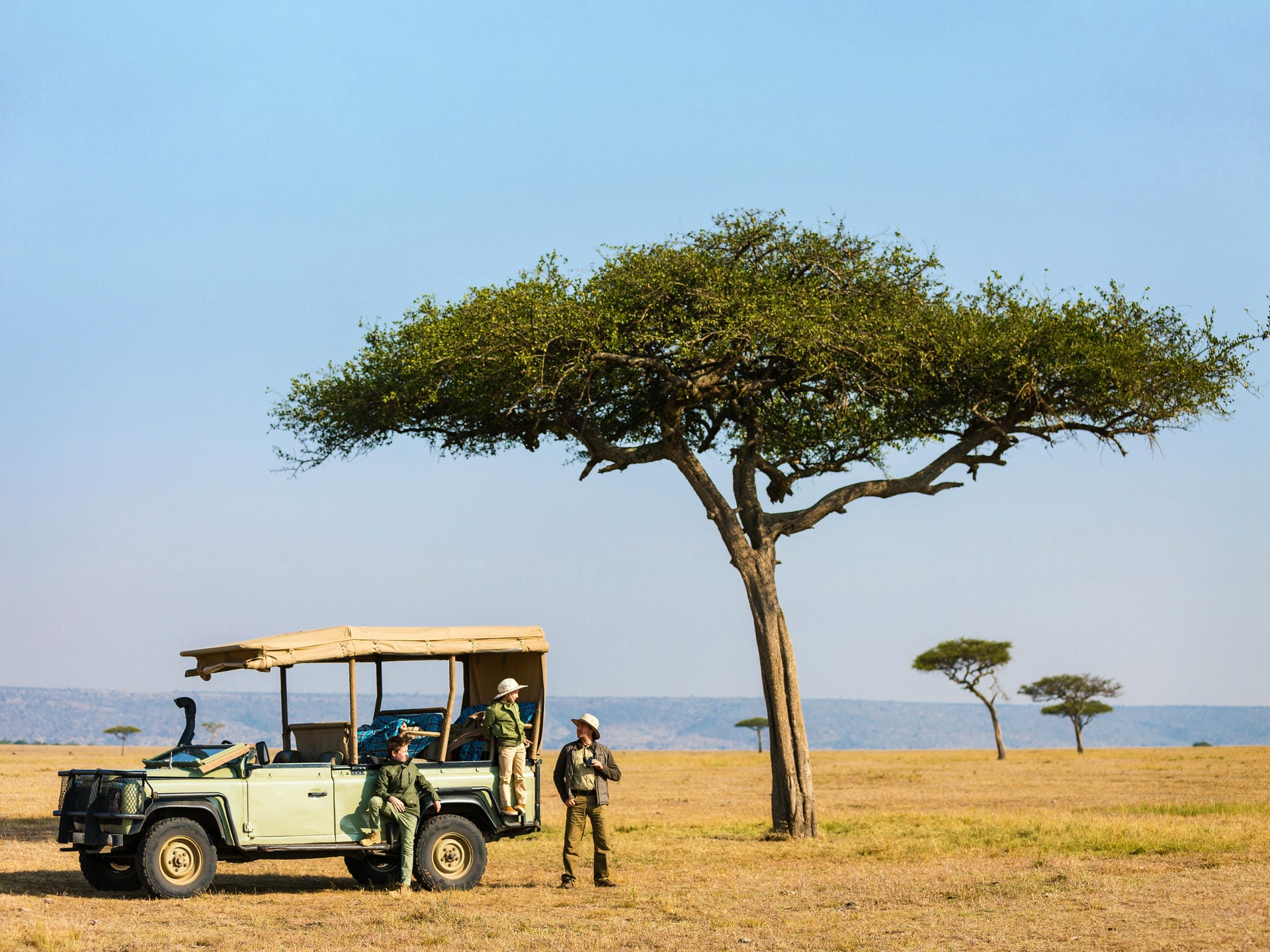
Questions & Answers
Our Service
Of course! Whether you want to cancel a day, add two, change a national park, or add a stay in Zanzibar. We'll customize your trip just for you.
Any consultation or customization of your itinerary before your final booking is free of charge and without obligation. So do not hesitate to contact us. Without your definitive commitment to a booking, there is no cost to you!
Request a no-obligation quote now for your next dream trip.
All our offers are with full board and English speaking guide. The cost already includes all park fees and domestic flights according to the program.
Our trips are very versatile and individual. Detailed information can be found with the respective offers on our website.
Yes, of course. Flying in a balloon over the savannah is offered in Tanzania in the Serengeti, the Ngorongoro Conservation Area, the Tarangire National Park and the Ruaha National Park. In Kenya this unique adventure can be experienced in the Masai Mara. Activities which are not mentioned in the program can always be added at an extra cost.
Yes, we are a member of the Swiss recognised guarantee fund "Swiss Travel Security". All customer funds are therefore insured against insolvency.
Trip Planning
From June to October the weather in Tanzania and Kenya is dry and mild. All national parks are accessible. In addition, the spectacular river crossing of the wildebeest through the Serengeti and the Masai Mara takes place here.
From mid-March to May and November is the rainy season. But even this has its charm. Hotels and lodges are cheaper, the national parks flourish and the big mass of tourists stays away.
Mid-December to February is mid-season and basically dry.
When you book, you will receive all the important information before the trip with the necessary preparations and a general packing list. Even during your trip we are there for you by phone and in writing.
To make your safari a dream trip, planning needs at least 6 months in advance.
Of course, booking is also possible at short notice. But especially in the high season from June to October, the popular lodges are often booked up quickly. It is accordingly worthwhile to book early.
On domestic flights in small aircraft, a maximum of 20 kg of luggage per person is allowed. It is generally recommended to take a backpack or soft travel bag instead of a hard-sided suitcase. These are easier to stow in the respective means of transportation and less sensitive to shocks on the bumpy roads.
Yes, of course. Even for children, a safari is a lasting experience. The tour will be adapted to your needs. A trip through Tanzania and Kenya is a trip for the whole family. The spacious vehicles have enough seats.
Even with little knowledge of the language, a guided tour with an English-speaking guide is quite feasible. In addition, a guide with knowledge of another language can accompany you for a small extra charge.
Yes. Already since summer 2020, all travelers are welcome.
Tanzania welcomes both vaccinated and unvaccinated visitors without an entry quarantine.
Since January 12, 2023, neither vaccination certificates nor PCR tests are required for entry, and an online health form is no longer necessary.
Preventive health measures such as frequent hand washing and social distancing are recommended. The wearing of face masks is not mandatory.
Safari
Absolutely! We also have safaris on offer that last only 5 days or less.
A short safari can be combined with domestic flights. So you experience the absolute highlights of the country within a few days - whether in the north or south.
Contact us and share your wishes with us. We'll help you put together your individual itinerary!
In Tanzania, we do not recommend traveling on your own.
For one thing, the roads are in very poor condition. Driving for hours over rough gravel, dodging huge potholes or large cracks on earthy roads is not everyone's cup of tea. It also requires some skill and knowledge to find your way around the national parks.
In Kenya a self-drive trip is quite possible.
The roads are well developed and the paths are signposted. What you miss with a rental car, however, are the exciting and expert narrations of your personal guide about nature and wildlife. As well as the convenience of a comfortable Land Cruiser with pop-up roof for the best view of wildlife.
It is not mandatory to book a guide. Nevertheless, we recommend a guided tour. The guides know their country very well. With their trained eyes and many years of experience, they know exactly where the animals are.
A guide makes your stay in Africa really comfortable. You don't have to drive around on bumpy roads in the park yourself and can concentrate on the wildlife and scenery. He also takes care of checking you into the lodges and much more.
Comfortable and light clothes / shoes are the order of the day for everyone. A warm windbreaker is recommended. There are no regulations of dress color for the Game Drive in the national park. Wear what you like!
Only for the walking safari good closed-toe shoes and earth-toned clothes are recommended. Bright colors attract insects.
Meals at the lodges (which also provide packed lunches for the safaris) are a mix of African, European and international cuisine. The selection of beverages reflects much that is familiar.
Water should be purchased for hygienic reasons and will be provided to you free of charge during the game drives.
Our vehicles have six seats under retractable roof and a passenger seat next to the guide.
A family with children can fit six people. A safari with five adults occupies the vehicle ideally, for a group with more than five people we recommend booking a second off-road vehicle.
In Tanzania, the speed limit is set at 80 km/h on rural roads and 50 km/h in built-up areas. This entails slower progress than one is used to in Europe. In Kenya, the speed limit on rural roads is 100 km/h, which is a little faster.
In Tanzania the trips between the national parks usually take between 2-3 hours and in Kenya about 3-4 hours.
Tanzania
Tanzania is famous for the unique national parks like Serengeti and Ngorongoro Crater, Kilimanjaro (highest mountain in Africa) and the gorgeous beaches in Zanzibar.
If you want to go on a safari, then we definitely recommend visiting Serengeti and Ngorongoro Crater. For an unforgettable stay by the sea, a stopover in Zanzibar is essential. For a breathtaking hike, head to Kilimanjaro.
Cheap and reliable train or bus systems do not yet exist in Tanzania, unfortunately. The intercity buses (called Dalla-Dallas) are packed with people and are not recommended for safety reasons.
Yes, of course. Life in Tanzania takes place outdoors. During your trip, you will witness some of it already on the car rides from the road.
For those interested, there is always a visit to the Maasai on the program or a walk through the bush to the last remaining hunter-gatherers in the East African region.
The voltage in Tanzania is 220 - 230 volts. A three-pin travel adapter (type G) is required.
Besides the landline connection, which is the standard of a third world country, the internet is becoming more and more important. In many lodges, the WLAN can be used by means of a password (partly also free of charge).
Yes, this is not a problem. Many lodges have a buffet which includes some delicious vegetarian menus. For fixed dishes, an alternative meal is always provided upon request.
In the lodges, on safari and guided walks it is quite common to pay a tip. This should be at your discretion and satisfaction. However, there is no obligation, the best tip is the one that comes from the heart.
Some indications for orientation:
10-15 USD - safari guide per day / car
3-10 USD - per day in the lodge
1 USD - porters and cab drivers
90-120 USD - mountain guide Kilimanjaro (Total 6-day tour)
Tanzania thrives on tourism. About 20% of Tanzania's gross domestic product is generated in the tourism industry. More than 10% of Tanzania's workforce is employed in this sector.
Tanzania is considered the country for safaris and is equally famous for the beaches in Zanzibar. This exclusivity has its price. In return, a safari in Tanzania promises unique wildlifesightings and beaches rarely found in Africa.
Kenya
Must-see attractions in Kenya include the Masai Mara, Amboseli National Park with majestic Kilimanjaro (Tanzania) as a backdrop, and Lake Nakuru National Park with its flamingo population. A visit to Nairobi, the capital of Kenya, is also worthwhile for cultural insights and the Nairobi National Park.
Yes, there are several ways to get in touch with the local communities in Kenya. For example, there are cultural tours and visits to traditional villages where you can learn about the culture, music, dance and daily life of the locals.
Passport: Make sure that your passport is valid for at least six months from the date of your entry.
Visa: It is recommended to apply for your visa online in advance to avoid possible waiting times upon arrival.
Return Ticket: You may be required to present a return or onward ticket upon entry into Kenya.
Yellow Fever Vaccination Certificate: Vaccination is mandatory for entry within 6 days from a yellow fever endemic area, including entry from Tanzania.
The voltage in Kenya is 240 volts. A three-pin travel adapter (type G) is necessary.
Cash is widely available and uncomplicated. Major credit cards such as Visa and Mastercard are widely accepted in larger hotels, restaurants, stores and supermarkets in urban areas.
The official currency in Kenya is the Kenya Shilling. However, US dollars are also accepted as payment in many tourist areas, hotels and large stores.
Yes, this is not a problem. Many lodges have a buffet which includes some delicious vegetarian menus. For fixed dishes, an alternative meal is always provided upon request.
Yes, tipping is common in Kenya and expected by many service providers. Here are some guidelines that may help you:
5-10 USD - safari guide per person / day.
3-5 USD - per day at the lodge
1 USD - porters and cab drivers
10% service charge in restaurants
Although Kenya is relatively safe as a travel destination, you should still take some precautions. Avoid remote areas, especially at night, and be careful with your valuables. In addition, the DFA advises against travel to several parts of the country: Mombasa County, rural areas and border regions with Somalia.
Uganda
The absolute highlights in Uganda include gorilla trekking in Bwindi Impenetrable National Park, Queen Elizabeth National Park with its diverse landscapes, and Murchison Falls National Park with the impressive waterfalls of the Nile. Kibale Forest is also well known for chimpanzee trekking.
During gorilla trekking, you hike through the rainforest with experienced rangers until you find a gorilla family. The encounter is strictly regulated and limited to about one hour to protect the animals. A good level of fitness is recommended, as the hikes can be challenging.
Self-drive safaris in Uganda are possible but more challenging than in countries like Namibia or South Africa. Road conditions, navigation, and remote areas make traveling with an experienced guide much more comfortable and safe.
Yes, you need a visa to enter Uganda. It can usually be applied for online as an e-visa. Your passport must be valid for at least six months.
The official currency is the Ugandan Shilling. US dollars are often accepted in tourist accommodations. It is recommended to carry small amounts of cash.
The voltage is 240 volts. Type G sockets are used, so you will need a suitable travel adapter.
The best time to visit is during the dry seasons from June to September and December to February. Conditions for wildlife viewing and gorilla trekking are best during these months.
Yes, a guided safari is highly recommended in Uganda. An experienced guide knows the best routes, increases your chances of wildlife sightings, and handles the logistics on the ground.
Uganda is generally considered a safe travel destination if standard precautions are followed. It is advisable to check current travel advisories and take care of valuables.
Namibia
The highlights in Namibia include Etosha National Park with its waterholes, the dunes of Sossusvlei in Namib-Naukluft National Park, the rugged Skeleton Coast, and the vast landscapes of Damaraland.
Yes, Namibia is one of the best countries for self-drive safaris. Roads are well maintained and navigation is easy. Round trips with rental cars or 4x4 vehicles with rooftop tents are especially popular.
Swiss travelers require a visa. It can either be applied for online as an e-visa in advance or obtained on arrival at selected border posts and airports.
The official currency is the Namibian Dollar (NAD), which is pegged 1:1 to the South African Rand. Both currencies are accepted throughout the country.
Credit cards such as Visa and Mastercard are widely accepted in hotels, lodges, and restaurants. In more remote areas, it is advisable to carry cash.
The voltage is 220–240 volts. Type D and M sockets are used, so a suitable travel adapter is required.
The best time for wildlife viewing is the dry season from May to October, when animals gather around water sources. However, Namibia is a year-round destination, especially for landscapes and photography.
A guide is not strictly necessary, as Namibia is ideal for self-drive travel. However, guided safaris offer additional comfort, local expertise, and deeper insights into nature and wildlife.
Namibia is considered one of the safest countries to travel in Africa. Nevertheless, standard precautions should be taken, especially in cities and regarding valuables.
Most roads are well-maintained gravel roads. Major routes are partly paved. A 4x4 vehicle is recommended for more remote regions.
South Africa
South Africa offers an incredible variety of highlights. The most famous include Kruger National Park for safaris, Cape Town with Table Mountain, the Garden Route and the wine regions around Stellenbosch and Franschhoek.
Many itineraries combine safari, coastline and culinary experiences. This unique mix makes South Africa one of the most diverse travel destinations in the world.
Yes, South Africa is perfect for self-drive journeys. The roads are generally in good condition, signage is clear and many regions can easily be explored independently.
Popular routes include the Garden Route, the wine regions and self-drive safaris in Kruger National Park.
South Africa can be travelled safely if basic precautions are taken. In cities and tourist areas, it is advisable to stay aware and follow local recommendations.
With good planning, carefully selected accommodations and a bit of caution, travelling through South Africa is safe and enjoyable.
South Africa is a year-round destination with different climate zones. The best time for safaris in Kruger National Park is from May to October, when vegetation is drier and wildlife is easier to spot.
Cape Town and the Garden Route are best visited from November to March, when the weather is warm and dry.
Yes, South Africa is one of the top safari destinations in Africa. Kruger National Park offers excellent wildlife viewing, both on guided game drives and self-drive safaris. Additionally, there are many private reserves that provide more exclusive safari experiences.
Yes, an international driving permit is required for a self-drive trip in South Africa. It is only valid together with your national driving licence. The international driving permit can be obtained from your local road traffic office.
South Africa has very well-developed tourist infrastructure. There is a wide range of accommodations, restaurants and activities across all price categories.
Fuel stations, supermarkets and medical facilities are also easily accessible in most regions.
Yes, vegetarian food is widely available in South Africa. Many restaurants and accommodations offer a good selection of vegetarian dishes.
Individual dietary requirements are usually accommodated in lodges and hotels.
Yes, tipping is customary in South Africa and expected in many situations. In restaurants, around 10–15% of the bill is standard.
On safaris and in lodges, tipping guides and staff is appreciated and can be given based on your satisfaction.